Do you love easy, delicious recipes? Join the Food On Paper family and never miss a recipe

german chocolate cake
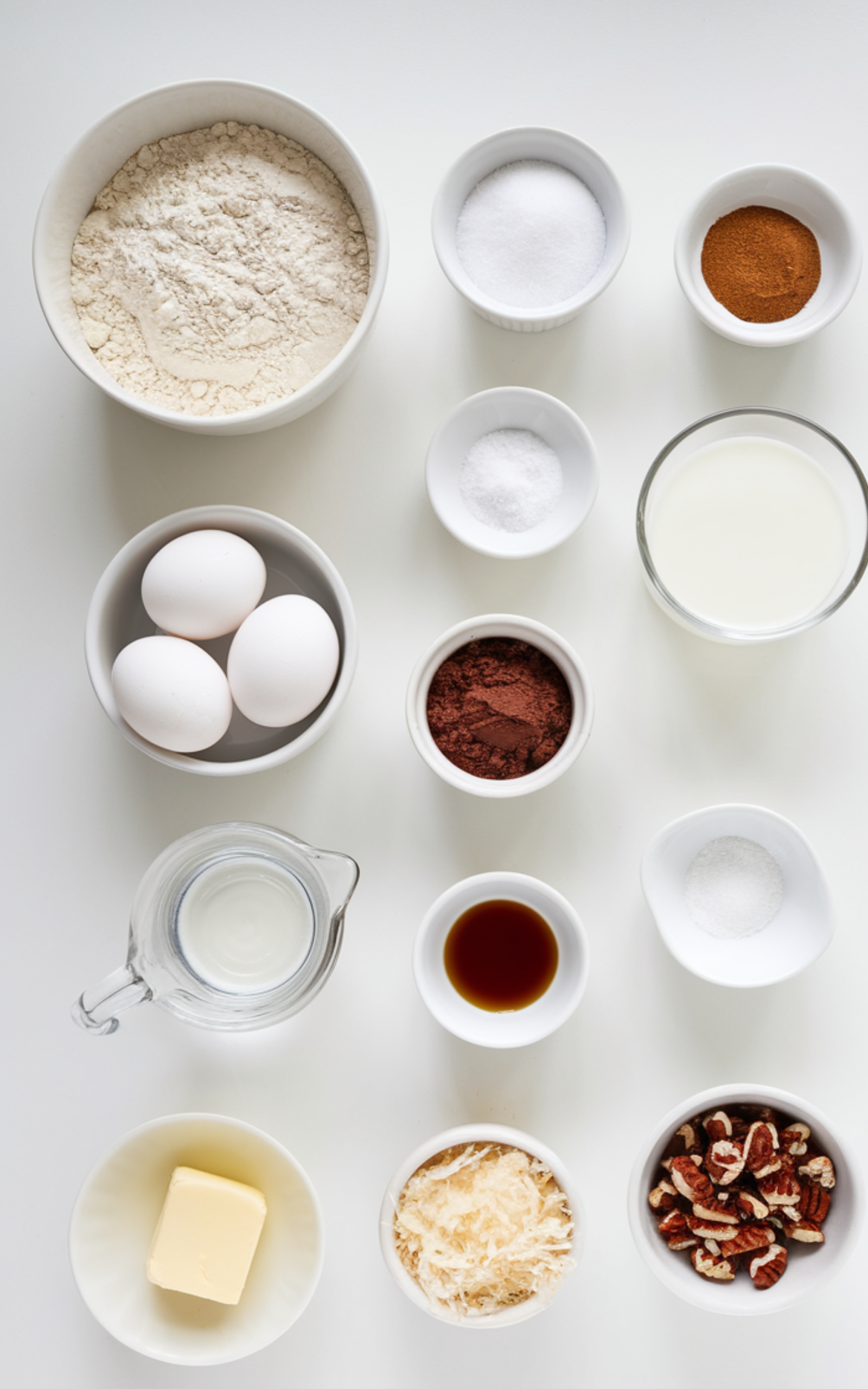
Every time I bake German chocolate cake, it reminds me of hosting my daughter’s first big birthday party, when I nervously carried that beautiful layered dessert to the table. German chocolate cake quickly became my signature treat for holidays and potlucks. I love serving German chocolate cake with vanilla bean ice cream, salted caramel drizzle, or a cozy mug of hot chocolate on chilly evenings.
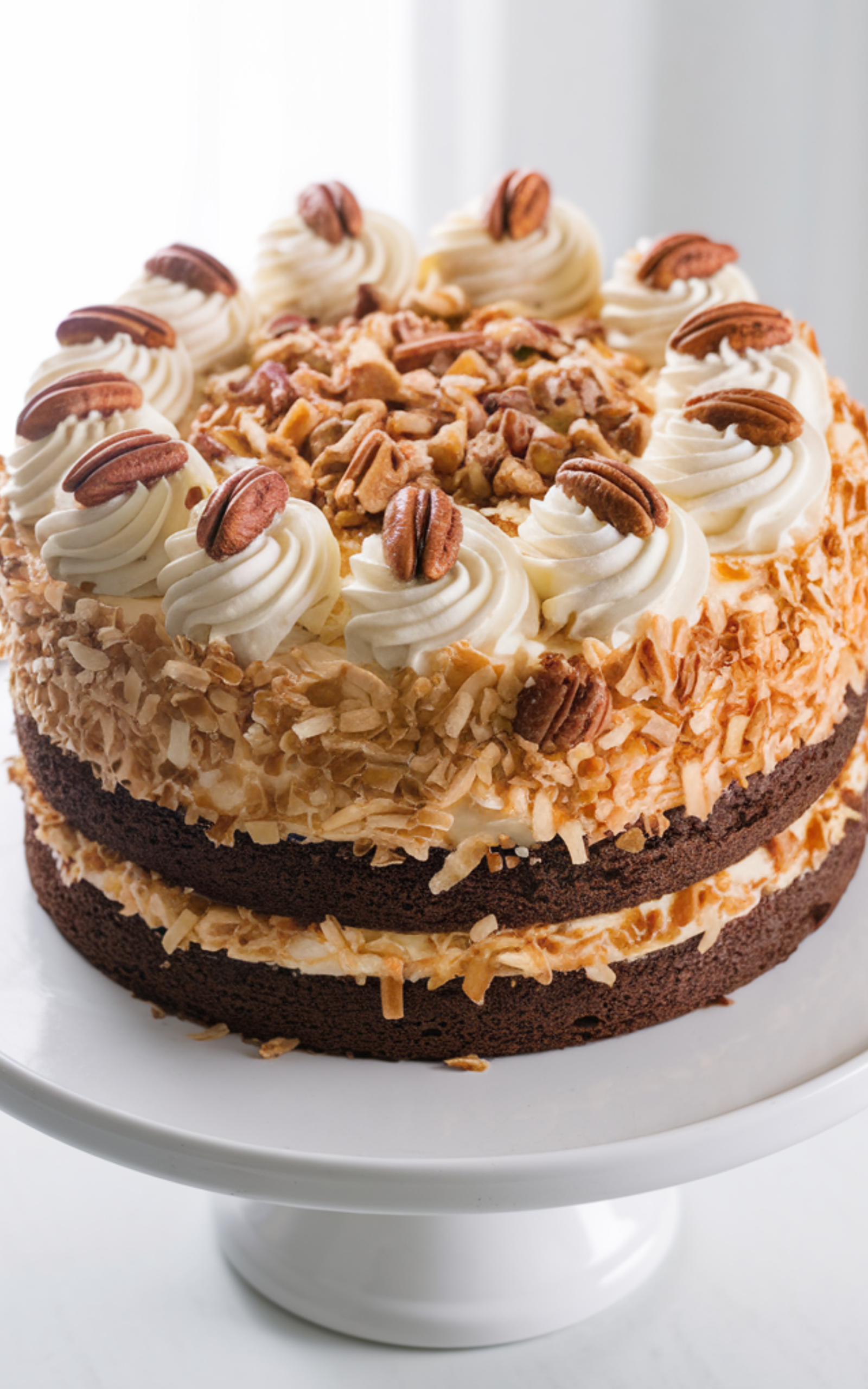
Ingredients
- All-purpose flour
- Granulated sugar
- Brown sugar
- Unsweetened cocoa powder
- Baking soda
- Baking powder
- Salt
- Eggs
- Buttermilk
- Vegetable oil
- Vanilla extract
- Hot water
- Evaporated milk
- Sweetened shredded coconut
- Chopped pecans
- Unsalted butter
Ingredient Notes
- All-purpose flour: Provides the cake’s structure; measure using the spoon-and-level method to avoid a dense texture. Cake flour can be substituted for a softer crumb.
- Granulated sugar: Sweetens and tenderizes the chocolate cake layers while helping create a light texture.
- Brown sugar: Adds moisture and a subtle caramel note, especially important in the coconut pecan frosting.
- Unsweetened cocoa powder: Delivers deep chocolate flavor; use natural cocoa for traditional results, or Dutch-processed for a slightly smoother taste.
- Baking soda: Reacts with the buttermilk to provide lift and tenderness.
- Baking powder: Supports even rising and a balanced structure.
- Salt: Enhances chocolate flavor and balances sweetness.
- Eggs: Bind ingredients together and contribute richness and stability to the cake batter.
- Buttermilk: Adds moisture and a slight tang; whole milk with a splash of vinegar can be used if needed.
- Vegetable oil: Keeps the cake exceptionally moist and soft for days.
- Vanilla extract: Rounds out the chocolate and coconut flavors beautifully.
- Hot water: Blooms the cocoa powder, intensifying the chocolate flavor and ensuring a smooth batter.
- Evaporated milk: Essential for the signature coconut pecan frosting; provides richness and caramelization.
- Sweetened shredded coconut: The defining ingredient in German chocolate cake frosting, offering sweetness and chewy texture.
- Chopped pecans: Add crunch and nutty depth; lightly toast for enhanced flavor.
- Unsalted butter: Creates a silky, rich frosting base and contributes to a tender cake crumb.
How to Make German Chocolate Cake?
Step 1:
Preheat your oven to 350°F and prepare two or three round cake pans by greasing and lining the bottoms with parchment paper to ensure easy release. Proper pan preparation prevents sticking and preserves the delicate layers of your German chocolate cake, especially since the cake is very moist.
Step 2:
In a large mixing bowl, whisk together the all-purpose flour, granulated sugar, unsweetened cocoa powder, baking soda, baking powder, and salt until evenly combined. Mixing dry ingredients thoroughly ensures even leavening and prevents pockets of baking soda or cocoa.
Step 3:
In a separate bowl, beat the eggs lightly, then add buttermilk, vegetable oil, and vanilla extract. Mix until smooth and fully combined. Slowly add the wet ingredients to the dry mixture, stirring just until incorporated. Avoid overmixing, as this can make the cake tough instead of tender.
Step 4:
Carefully pour in the hot water while mixing on low speed. The batter will be thin, which is completely normal for German chocolate cake. The hot water enhances the cocoa flavor and creates a smooth, silky consistency.
Step 5:
Divide the batter evenly between the prepared pans. Bake for approximately 30–35 minutes, or until a toothpick inserted in the center comes out with a few moist crumbs but no wet batter. Avoid overbaking, as this cake is meant to be soft and moist.
Step 6:
Allow the cake layers to cool in the pans for 10–15 minutes before transferring them to wire racks to cool completely. Cooling completely is critical before frosting; warm layers will cause the coconut pecan frosting to slide.
Step 7:
To prepare the signature frosting for German chocolate cake, combine evaporated milk, brown sugar, egg yolks if reserved, and unsalted butter in a saucepan over medium heat. Stir constantly to prevent curdling and cook until the mixture thickens and turns golden, about 10–12 minutes.
Step 8:
Remove the frosting mixture from the heat and stir in vanilla extract, sweetened shredded coconut, and chopped pecans. Allow it to cool to room temperature. The frosting will thicken further as it cools, creating that iconic texture that defines German chocolate cake.
Step 9:
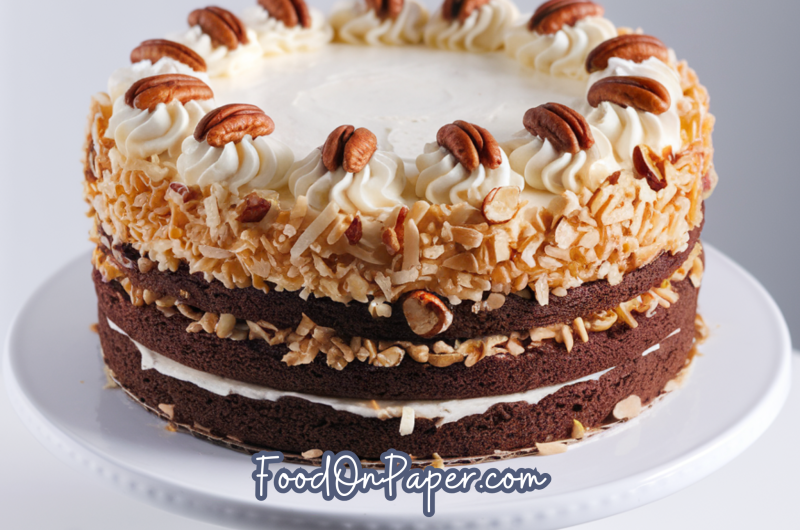
Assemble the cake by placing one cooled layer on a serving plate. Spread a generous amount of coconut pecan frosting evenly over the top. Add the next layer and repeat. Traditionally, German chocolate cake leaves the sides unfrosted, allowing the beautiful layers to show.
Step 10:
Let the assembled cake rest for at least 30 minutes before slicing to allow the frosting to set properly. This step ensures clean slices and balanced flavor distribution in every bite of your homemade German chocolate cake.
Kitchen Equipment Needed
- Mixing bowls
- Electric mixer or stand mixer
- Whisk
- Rubber spatula
- Measuring cups and spoons
- Round cake pans
- Parchment paper
- Wire cooling rack
- Medium saucepan
- Wooden spoon or heatproof spatula
Pro Tips for Best Results
For the best German chocolate cake, always use room-temperature eggs and buttermilk for smooth blending and even texture. Toast the pecans lightly before adding them to the frosting to deepen their flavor. Stir the frosting constantly over medium heat to prevent scrambled eggs or scorching. Let both cake layers and frosting cool fully before assembly for stable layering. Based on professional baking experience, this cake tastes even better the next day as the flavors meld and intensify, so consider baking it a day ahead for special occasions.
Storage, Freezing, and Reheating
German chocolate cake should be stored covered in the refrigerator due to the coconut pecan frosting, which contains dairy. It will stay fresh for up to 4–5 days when properly sealed. For freezing, wrap individual slices tightly in plastic wrap and place them in an airtight container for up to 2 months. Thaw overnight in the refrigerator for the best texture. Bring slices to room temperature before serving to restore softness and flavor depth. Reheating is generally unnecessary, but a few seconds at room temperature improves texture if chilled.
Recipe Variations and Substitutions
German chocolate cake can easily be adapted to suit different dietary needs. For a gluten-free version, substitute a 1:1 gluten-free baking flour blend. For a dairy-free option, use plant-based milk with vinegar instead of buttermilk and a dairy-free butter alternative for the frosting. You can also add a thin layer of chocolate ganache between cake layers for extra richness, which many US households enjoy for celebrations.
FAQ
Can I make German chocolate cake ahead of time?
Yes. German chocolate cake actually tastes better after resting overnight in the refrigerator. The flavors deepen, and the frosting sets beautifully for clean slices.
Why is it called German chocolate cake?
The name comes from Samuel German, an American baker who developed a type of dark baking chocolate for the Baker’s Chocolate Company in the 19th century. The cake is not from Germany but is a classic American dessert.
Can I frost the sides of German chocolate cake?
Traditionally, the sides are left unfrosted to showcase the layers. However, you may frost the sides with chocolate buttercream if you prefer a fully frosted presentation.
How do I know when the coconut pecan frosting is thick enough?
The frosting should coat the back of a spoon and slowly drip off rather than run. It thickens more as it cools, so avoid overcooking.
Can I use a boxed cake mix?
Yes, but homemade German chocolate cake provides superior moisture and flavor. If using a mix, focus on making the coconut pecan frosting from scratch for authenticity.
What makes German chocolate cake different from regular chocolate cake?
The defining feature is the coconut pecan frosting. While many chocolate cakes use buttercream or ganache, German chocolate cake features a rich, caramel-like topping filled with coconut and pecans.
Can I make this recipe into cupcakes?
Absolutely. Divide the batter into lined cupcake tins and bake for 18–22 minutes. Top each cupcake with a spoonful of coconut pecan frosting for a handheld version of German chocolate cake.
German chocolate cake
Course: DessertCuisine: AmericanDifficulty: EasyServings
12
servingsPrep time
25
minutesCooking time
35
minutesCalories
520
kcalTotal time
1
hourA rich and moist chocolate layer cake topped with the iconic coconut pecan frosting.
Ingredients
All-purpose flour
Granulated sugar
Brown sugar
Unsweetened cocoa powder
Baking soda
Baking powder
Salt
Eggs
Buttermilk
Vegetable oil
Vanilla extract
Hot water
Evaporated milk
Sweetened shredded coconut
Chopped pecans
Unsalted butter
Directions
- Preheat your oven to 350°F and prepare two or three round cake pans by greasing and lining the bottoms with parchment paper to ensure easy release. Proper pan preparation prevents sticking and preserves the delicate layers of your German chocolate cake, especially since the cake is very moist.
- In a large mixing bowl, whisk together the all-purpose flour, granulated sugar, unsweetened cocoa powder, baking soda, baking powder, and salt until evenly combined. Mixing dry ingredients thoroughly ensures even leavening and prevents pockets of baking soda or cocoa.
- In a separate bowl, beat the eggs lightly, then add buttermilk, vegetable oil, and vanilla extract. Mix until smooth and fully combined. Slowly add the wet ingredients to the dry mixture, stirring just until incorporated. Avoid overmixing, as this can make the cake tough instead of tender.
- Carefully pour in the hot water while mixing on low speed. The batter will be thin, which is completely normal for German chocolate cake. The hot water enhances the cocoa flavor and creates a smooth, silky consistency.
- Divide the batter evenly between the prepared pans. Bake for approximately 30–35 minutes, or until a toothpick inserted in the center comes out with a few moist crumbs but no wet batter. Avoid overbaking, as this cake is meant to be soft and moist.
- Allow the cake layers to cool in the pans for 10–15 minutes before transferring them to wire racks to cool completely. Cooling completely is critical before frosting; warm layers will cause the coconut pecan frosting to slide.
- To prepare the signature frosting for German chocolate cake, combine evaporated milk, brown sugar, egg yolks if reserved, and unsalted butter in a saucepan over medium heat. Stir constantly to prevent curdling and cook until the mixture thickens and turns golden, about 10–12 minutes.
- Remove the frosting mixture from the heat and stir in vanilla extract, sweetened shredded coconut, and chopped pecans. Allow it to cool to room temperature. The frosting will thicken further as it cools, creating that iconic texture that defines German chocolate cake.
- Assemble the cake by placing one cooled layer on a serving plate. Spread a generous amount of coconut pecan frosting evenly over the top. Add the next layer and repeat. Traditionally, German chocolate cake leaves the sides unfrosted, allowing the beautiful layers to show.
- Let the assembled cake rest for at least 30 minutes before slicing to allow the frosting to set properly. This step ensures clean slices and balanced flavor distribution in every bite of your homemade German chocolate cake.