
Do you love easy, delicious recipes? Join the Food On Paper family and never miss a recipe

kimchi fried rice
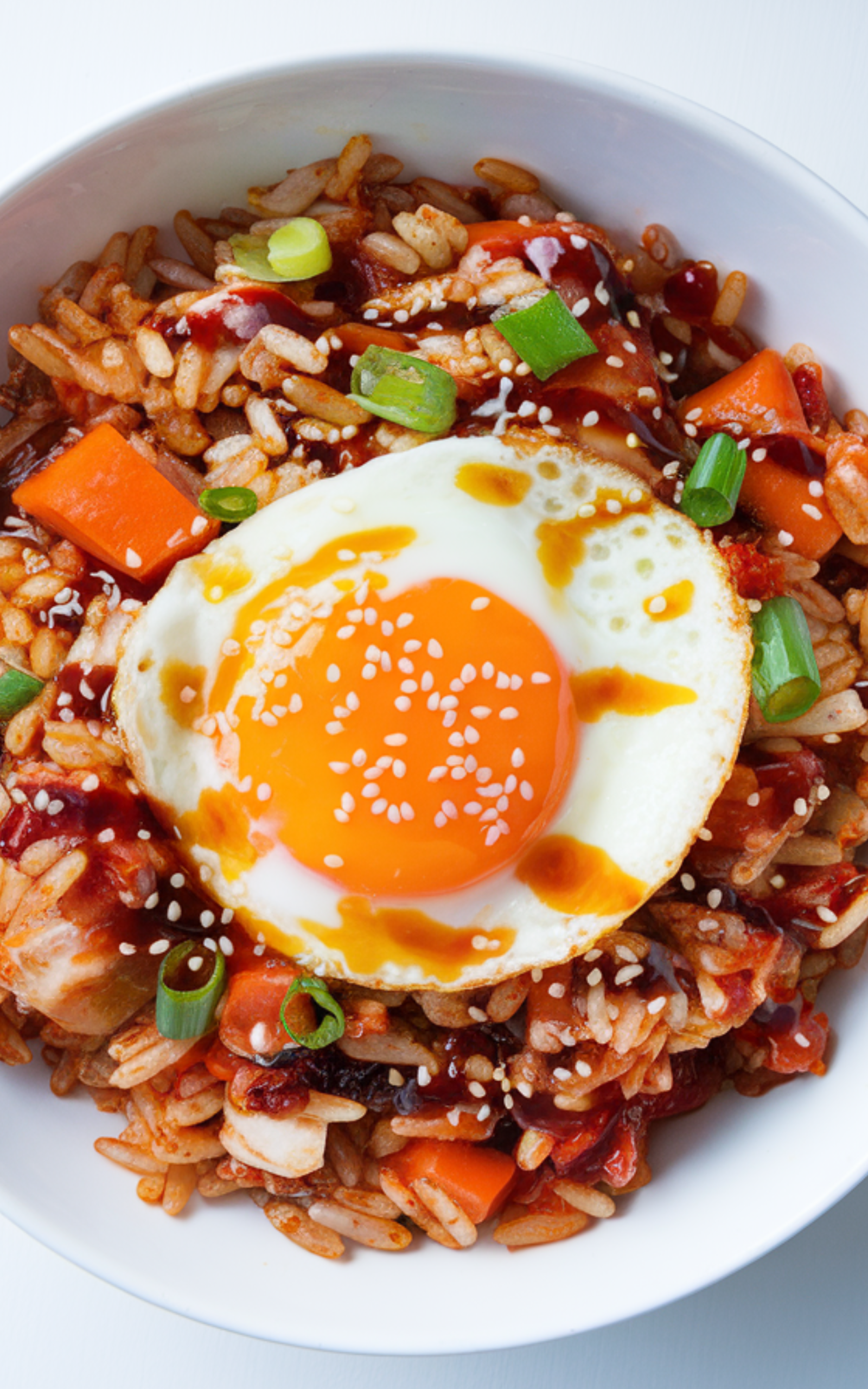
I remember the first time I made kimchi fried rice for my kids—they were skeptical at first, but one bite and it became an instant favorite. Now, kimchi fried rice is my go-to weeknight meal when I need something quick and flavorful. I love pairing it with Homemade Vanilla French Beignets for a sweet contrast, a crisp garden salad for freshness, or a simple iced matcha latte for a cozy snack at home. Making kimchi fried rice reminds me that even busy evenings can feel special, and it’s become a recipe I rely on again and again.
Ingredients
- Cooked rice
- Kimchi
- Kimchi juice
- Vegetable oil
- Sesame oil
- Garlic
- Onion
- Green onions
- Carrot
- Soy sauce
- Gochujang
- Sugar
- Eggs
- Sesame seeds
- Salt
- Black pepper
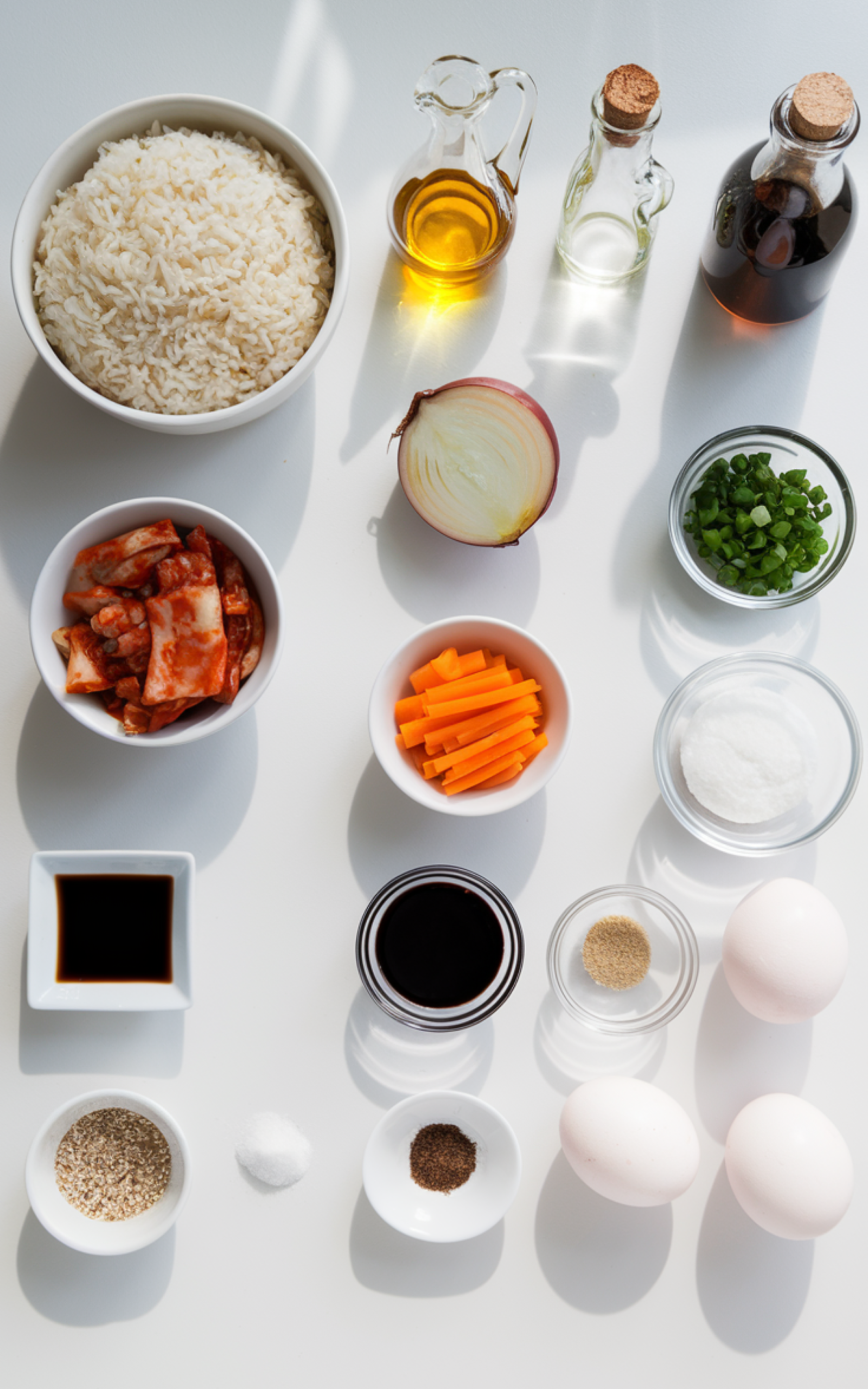
Ingredient Notes
- Cooked rice: Best if cold or day-old; prevents soggy fried rice and ensures proper texture.
- Kimchi: Provides tangy, spicy flavor; adjust quantity based on preferred heat level.
- Kimchi juice: Adds umami and depth; substitute with a splash of rice vinegar and a pinch of sugar if unavailable.
- Vegetable oil: For sautéing; can substitute with canola or sunflower oil.
- Sesame oil: Adds nutty aroma; drizzle at the end for flavor, not for cooking.
- Garlic: Enhances savory flavor; finely mince or grate for even distribution.
- Onion: Adds sweetness and depth; yellow or white onion works best.
- Green onions: Fresh garnish and mild onion flavor; reserve some for topping.
- Carrot: Adds color and crunch; finely diced or julienned for quick cooking.
- Soy sauce: Provides saltiness and umami; low-sodium soy sauce can reduce sodium content.
- Gochujang: Korean red chili paste; balances heat, sweetness, and depth.
- Sugar: Balances acidity from kimchi; optional, depending on the kimchi’s sweetness.
- Eggs: Adds richness; can be scrambled into rice or fried on top.
- Sesame seeds: Garnish; enhances texture and aroma.
- Salt: Adjust carefully, as kimchi and soy sauce are already salty.
- Black pepper: Adds mild heat; freshly ground preferred for better flavor.
How to Make Kimchi Fried Rice?
Step 1:
Prepare all ingredients by chopping kimchi into bite-sized pieces, slicing onions, carrots, and green onions, and separating eggs if frying separately. Have all sauces and seasonings ready. Cold, day-old rice works best to prevent mushiness.
Step 2:
Heat vegetable oil in a large nonstick or cast-iron skillet over medium-high heat. Add onions and carrots first, sautéing until slightly softened, about 2–3 minutes. Avoid overcooking to keep texture.
Step 3:
Add minced garlic and cook for 30 seconds until fragrant. Then add chopped kimchi and continue to sauté for 2–3 minutes until the kimchi is slightly caramelized, releasing its tangy flavor.
Step 4:
Add cooked rice to the pan, breaking up any clumps with a spatula. Stir-fry evenly to incorporate the kimchi mixture throughout. Ensure rice grains are separated and heated through for the best texture.
Step 5:
Pour in soy sauce, gochujang, kimchi juice, and sugar. Stir-fry for 2–3 minutes until rice is evenly coated. Taste and adjust seasoning with salt or pepper. Be cautious, as kimchi and soy sauce add salt naturally.
Step 6:
Push the rice to one side of the skillet, drizzle a bit of vegetable oil in the space, and crack eggs into it. Scramble gently until just set, then mix into the rice for a creamy, cohesive texture. Alternatively, fry eggs separately and place them on top.
Step 7:
Drizzle sesame oil over the rice and sprinkle chopped green onions and sesame seeds for aroma and garnish. Toss gently and serve immediately. Optional: top with extra gochujang or sliced nori for added flavor.
Kitchen Equipment Needed
- Nonstick skillet or cast-iron pan
- Spatula
- Cutting board
- Chef’s knife
- Measuring spoons
- Small bowl (for eggs)
- Serving plates or bowls
Pro Tips for Best Results
Use cold, day-old rice; freshly cooked rice tends to be too soft and sticky. Cook the kimchi just long enough to caramelize slightly but retain its tangy flavor. Add gochujang gradually, tasting as you go to control spice. Drizzle sesame oil at the very end to preserve its aroma. Avoid overcrowding the pan to ensure even cooking.
Storage, Freezing, and Reheating
Kimchi fried rice can be stored in an airtight container in the fridge for up to 3–4 days. For freezing, portion into freezer-safe containers and keep for up to 2 months. Reheat in a skillet over medium heat for the best texture; add a splash of water or oil to prevent drying. Avoid microwaving for long periods, as rice may become chewy.
Recipe Variations and Substitutions
For a vegetarian version, omit eggs or replace them with tofu. Swap kimchi for sauerkraut for a different tangy twist, though the flavor will change. Use brown rice for a healthier option or add cooked chicken, pork, or shrimp for protein. Adjust the spice with more or less gochujang depending on family preference. Incorporate vegetables like bell peppers or peas to adapt for US households’ tastes.
FAQ
What is the best rice for kimchi fried rice?
Day-old or cold short-grain white rice is ideal. Long-grain rice can be used, but it may not clump as well.
Can I make kimchi fried rice vegan?
Yes, omit eggs and use vegetable oil only. Tofu adds protein and texture.
How spicy is kimchi fried rice?
Spice depends on kimchi and gochujang used. Adjust the quantity to suit mild or spicy preferences.
Can I use fresh kimchi or only fermented kimchi?
Fermented kimchi gives a deeper flavor, but fresh kimchi works if cooked slightly longer to develop tanginess.
How do I prevent rice from being mushy?
Use cold, day-old rice and avoid over-stirring. Cook over medium-high heat for proper texture.
Can I store leftover kimchi fried rice?
Yes, refrigerate up to 4 days or freeze for up to 2 months. Reheat in a skillet for best results.
Can I add protein to kimchi fried rice?
Absolutely, cooked chicken, beef, pork, shrimp, or tofu work well. Add towards the end to heat through.
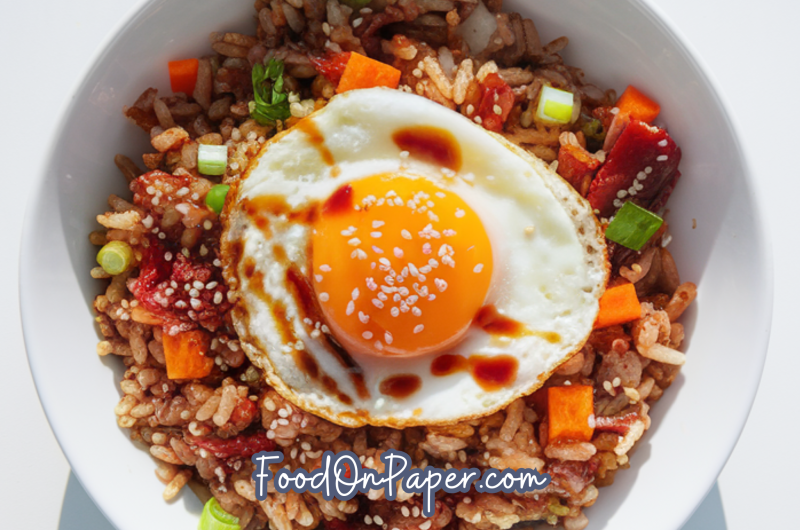
Kimchi fried rice
Course: DinnerCuisine: KOREANDifficulty: EasyServings
4
servingsPrep time
10
minutesCooking time
15
minutesCalories
450
kcalTotal time
25
minutesKimchi fried rice is a quick, tangy, and spicy dish made with day-old rice, fermented kimchi, and a touch of gochujang.
Ingredients
Cooked rice
Kimchi
Kimchi juice
Vegetable oil
Sesame oil
Garlic
Onion
Green onions
Carrot
Soy sauce
Gochujang
Sugar
Eggs
Sesame seeds
Salt
Black pepper
Directions
- Prepare all ingredients by chopping kimchi into bite-sized pieces, slicing onions, carrots, and green onions, and separating eggs if frying separately. Have all sauces and seasonings ready. Cold, day-old rice works best to prevent mushiness.
- Heat vegetable oil in a large nonstick or cast-iron skillet over medium-high heat. Add onions and carrots first, sautéing until slightly softened, about 2–3 minutes. Avoid overcooking to keep texture.
- Add minced garlic and cook for 30 seconds until fragrant. Then add chopped kimchi and continue to sauté for 2–3 minutes until the kimchi is slightly caramelized, releasing its tangy flavor.
- Add cooked rice to the pan, breaking up any clumps with a spatula. Stir-fry evenly to incorporate the kimchi mixture throughout. Ensure rice grains are separated and heated through for the best texture.
- Pour in soy sauce, gochujang, kimchi juice, and sugar. Stir-fry for 2–3 minutes until rice is evenly coated. Taste and adjust seasoning with salt or pepper. Be cautious, as kimchi and soy sauce add salt naturally.
- Push the rice to one side of the skillet, drizzle a bit of vegetable oil in the space, and crack eggs into it. Scramble gently until just set, then mix into the rice for a creamy, cohesive texture. Alternatively, fry eggs separately and place them on top.
- Drizzle sesame oil over the rice and sprinkle chopped green onions and sesame seeds for aroma and garnish. Toss gently and serve immediately. Optional: top with extra gochujang or sliced nori for added flavor.